How To Highlight Your Soft Skills When You Have Limited Experience
Jobsearch, Jobseekers / 30 July 2024
Finding a job when you have limited work experience can be a real conundrum. How do you prove that you’re a great fit for a job without years of experience under your belt? How do you create an impressive CV when you don’t have many, or perhaps any, jobs to list? The answer is to show your value and suitability through your soft skills.
- working well in a team
- leadership
- communication skills
- negotiation
- problem-solving
- adaptability
Of course, before you can highlight your soft skills, you need to know what they are.
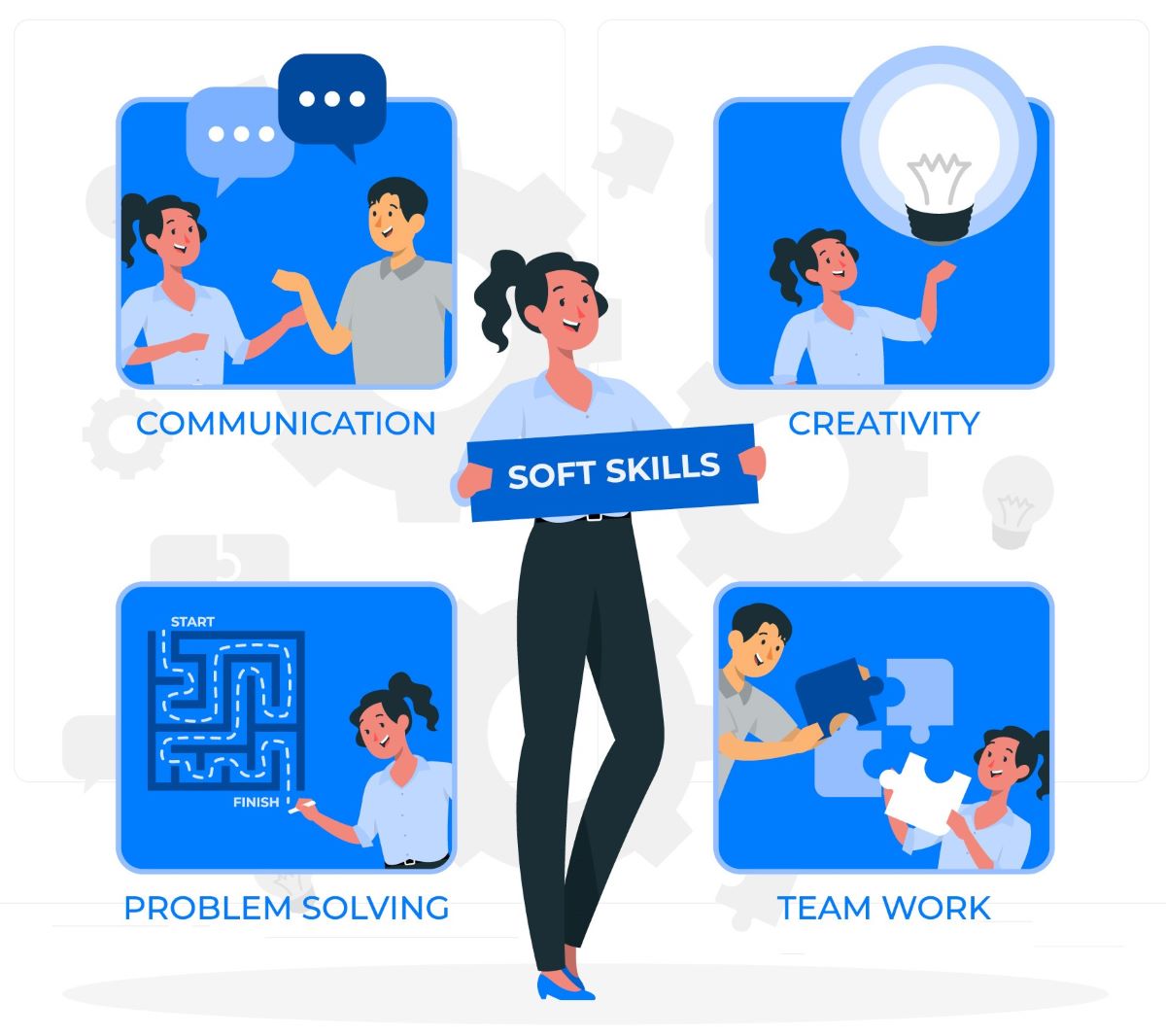
What Are Your Soft Skills?
So how do you identify your soft skills? Consider these three elements of your life experience:
- Education: what soft skills did you develop at school, college, university, and during training at work?
- Employment: what soft skills helped you to do your past and current jobs? Don’t forget to include work experience and internships.
- Hobbies and interests: what soft skills have you developed outside education and employment, doing things you love? This could also include volunteering projects.
You might identify soft skills like problem-solving (in education), emotional intelligence (at work), or creativity (in your hobbies).
For more insight into identifying your soft skills, why not take a free personality test?
How To Highlight Your Soft Skills In Your CV
Your CV is generally your first chance to make a good impression on an employer. While you may have limited experience to include, you can still demonstrate your suitability by filling your CV with relevant soft skills.
Choose The Right Soft Skills For The Job
Scour the job description to find the skills needed to carry out the role. You may or may not have the hard skills listed, but you can still show your suitability by matching your soft skills to those mentioned in the job description.
Rewrite your CV for each job you apply for to highlight the experience and skills mentioned in the job description. This will demonstrate your suitability and increase the searchability of your CV.
Create A Skills Section
Soft skills can become lost in your employment history, so why not create a skills section that makes it clear exactly which skills you have? This is another way to add those key terms to your CV for searchability.
If you have limited work experience but plenty of examples of how you’ve used soft skills, expand your list of skills to showcase those examples, for instance:
Communication
- Delivered a presentation on sustainable business practices to a team of 30 colleagues.
- Led a workshop on workplace communication for new employees.
- Contributed to the student union blog every month.
Creativity
- Shared original ideas during brainstorming sessions that helped overcome challenges at work.
- Invented a more effective method of logging client helpline entries.
- Suggested a marketing campaign that led to a 15% increase in customer engagement.
Adaptability
- Quickly adjusted to a new project management tool used by my team.
- Successfully handled last-minute client requests by reorganizing priorities and reallocating resources.
- Quickly adapted to studying from home during the Covid lockdowns in 2020.
Include Soft Skills In Your Work History Section
When you write a paragraph to describe the tasks and responsibilities of each job you’ve held, include soft skills. For instance, to highlight your communication and teamwork skills, you might say that you effectively collaborated with another team to achieve a successful result.
How To Highlight Your Soft Skills In A Job Interview
The other situation where you can easily highlight your soft skills is in a job interview. Just as you would prepare for any interview, promoting your worth as an employee through your soft skills takes a little preparation and thought.
Start With The Soft Skills In The Job Description
You’ll have already researched the soft skills mentioned in the job description when you wrote your CV. Return to that list now and match it against your own soft skills. Talking about your soft skills during the interview will demonstrate your suitability for the job.
Think Up Examples That Focus On Your Soft Skills
You may have already considered examples of how you’ve successfully used soft skills at work, in education, or during your hobbies. If not, this is the time to think up at least one example for each soft skill. Remember to keep the examples relevant to the job.
The STAR technique is ideal for formulating relevant examples. STAR stands for:
- Situation: describe the context or challenge you faced
- Task: what you did or your goal
- Action: the steps you took or the skills you used to complete the task
- Result: the outcome or impact of your actions
This technique can also be helpful when answering questions you didn’t expect to face.
Demonstrate Your Soft Skills Through Your Behaviour
Highlighting your soft skills during a job interview isn’t just about answering questions. Your behaviour can speak volumes too.
Active Listening
When you actively listen to someone, you listen to understand. That means giving the speaker your full attention, showing interest with eye contact and open body language, and noticing their tone of voice and facial expressions. Ask open-ended questions to encourage them to respond and reflect back what the speaker has told you in your own responses.
Active listening demonstrates your communication and empathy skills.
Body Language
Use your posture, gestures, and facial expressions to give an impression of confidence. Avoid fidgeting. Maintain open body language, for instance, don’t cross your arms.
Positive body language demonstrates your openness and approachability.
Collaboration
If you participate in a group activity as part of the interview process, actively engage with the other candidates. Acknowledge their ideas, build on them, and show your ability to work well with others.
This will demonstrate your teamwork, communication, and collaboration skills.
Wrapping it up
Demonstrating your suitability for a job doesn’t have to be all about your work history and qualifications. Highlighting your skills is an increasingly popular way to show that you’re a great fit as businesses embrace skills-based hiring. The key to successfully using this method is self-awareness. Dig in and discover your soft skills before focussing your CV and job interview performance on the specific soft skills that the employer is interested in.
People Also Read

Job hunting while you’re working full-time can be mentally, emotionally, and logistically challenging. Managing your time, expectations, and output is the key to getting the …

The use of AI, or applicant tracking systems (ATS), to screen CVs and job applications is common practice these days. You may already know about …

For past generations, reaching retirement age generally meant the end of one life stage and the beginning of another. It was a time to finish …
Job Description:Position Details:Pay: Up to $90,000 Yearly Bi-Weekly payFlexi...
Take your CDL-A career further in Frankfort Kentucky! Our drivers work hard to m...
Take your CDL-A career further! Our drivers work hard to move, supply, and provi...
Take your CDL-A career further! Our drivers work hard to move, supply, and provi...
Job Description:Position Details:Training Pay: $24 per hour. After training: A...
Job Description:Position Details:Average Annual Earnings: $80,000–$100,000+ (w...
