Energy, Utilities, Oil and Gas Career Guide
Sectors / 26 May 2023
A career in the energy, utilities, oil and gas sector offers a vast variety of job types, covering many specialities and industries. From sourcing and, generating power to supplying and managing it, this evolving industry plays an important role in everyday life.
While renewable energy is a rapidly advancing field, our reliance on oil and gas means that these areas remain central to the industry. As global demand grows and the sector evolves, so dos the need for skilled professionals. This makes it a strong option for long-term career security and well-paid opportunities for job seekers in both traditional and emerging energy markets.
This Career Guide will focus on three jobs in the energy, utilities, oil and gas sector: energy engineer, drilling engineer and geologist.
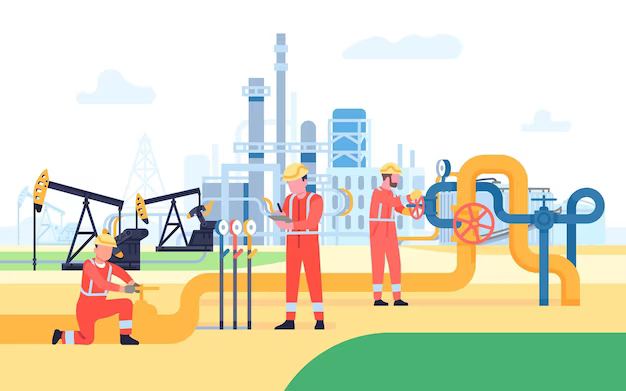
Potential Roles in Energy, Utilities, Oil and Gas
The energy, utilities, oil, and gas sector offers an incredibly diverse range of career opportunities. Positions vary widely, from support roles such as chefs, doctors, and pastors on an oil rig, to more corporate roles like HR managers, finance directors, and environmental specialists. In this guide, we’ll explore three examples of possible career paths in this sector.
Energy engineers work across both renewable and non-renewable sources. Their main task is to improve existing processes and develop new, more efficient ways to harness and generate energy. A job as an energy engineer means working at the forefront of this fast-paced industry, with strong potential for career progression and competitive salaries.
In the UK, the job title energy engineer is widely used across the sector. While this term is a recognised role in the US, it may also be referred to as energy systems engineer, sustainability engineer, or energy analyst.
Drilling engineers plan, manage and oversee the drilling of gas and oil wells from initial design through to completion. Many drilling engineer jobs are based on offshore rigs and involve working away from home for extended periods of time, although land-based work is available. Drilling engineers work as part of a multi-disciplinary team to ensure the drilling process is safe, efficient and cost-effective.
Geologists study rock formations and land characteristics to identify and assess potential drilling sites for the oil and gas industry. Working as a geologist in this sector has a more specialised focus compared to geology roles in other industries.
In this context, your job as a geologist is to support gas and oil drilling at every stage of the process providing expert advice to help the company meet safety standards and legal requirements. The work generally combines laboratory analysis with field-based investigations on-site.
Salary and Career Progression
There are exciting and rewarding career opportunities in the utilities, energy, oil, and gas sector for those who are willing to both study and work hard.
Energy Engineer
In the UK, entry level energy engineers can expect to start earn between £25,000 and £35,000. With experience, salaries can increase to between £40,000 and £60,000. The salary range is significantly more for senior or specialist roles, especially in large organisations.
In the US, starting salaries for energy engineers are usually between $60,000 and $75,000. With experience, you can earn $70,000 to $140,000 or more, especially in high-demand areas or with major employers in the energy sector.
You must have a relevant degree to become an energy engineer. Once you are established, there are plenty of opportunities to advance in this career, in both technical and leadership roles. Experienced energy may also achieve professional accreditation, such as Chartered Engineer (CEng) status in the UK, or Professional Engineer (PE) licensure in the US.
Drilling Engineer
In the UK, entry level drilling engineers typically earn around £25,000 to £35,000. With experience, salaries can rise to between £60,000 and £90,000. Senior drilling engineers may earn over £100,000, particularly in high risk and responsibility roles or with major international employers.
In the US, starting salaries for drilling engineers range from $90,000 to $110,000. With experience, earnings typically rise to $140,000 to $200,000, and may exceed that in senior, offshore, or international positions. Additional pay is common for work in high risk environments.
Career progression for drilling engineers may involve overseeing multiple wells at a time, managing larger or more complex projects, working for bigger companies, or moving into office-based managerial roles.
Geologist
In the UK, entry level salaries for geologists vary depending on the employer or sector, but you can expect to earn between £25,000 and £40,000 when starting out. With experience, salaries can rise significantly.
You can work in an employed capacity or as a contractor on a day rate. Career progression is possible by moving to larger companies, undergoing further training, and achieving chartered geologist status with The Geological Society. Senior geologists may earn between £70,000 and £100,000, particularly in the oil and gas industry or specialist consultancy roles.
Geologists can work in employed roles or as a contractor. Career progression may involve moving to larger companies, gaining experience in more specialised areas, completing further training, and achieving professional accreditation such as Chartered Geologist status through the Geological Society in the UK, or licensure as a Professional Geologist (PG) in the US.
Qualifications, Education and Experience
To become an energy engineers, you’ll need a university degree in a relevant field of engineering or science. Strong skills in maths, physics, and problem-solving are essential, and gaining practical experience through internships, work placements, or graduate schemes can improve your appeal to employers. The following could also be necessary or beneficial:
In the UK
- At least 4-5 GCSEs at grades 4 to 9 (A* to C) including maths and sciences
- 2-3 A Levels, ideally including maths and a science subject
- Bachelor’s degree in a relevant subject, preferably in an engineering speciality, like environmental, chemical or mechanical engineering
- Postgraduate study can be advantageous to progress to senior roles
- University courses accredited by the Institution of Engineering and Technology, the Energy Institute, or another professional body can improve your chances of achieving chartered engineer status later in your career
In the US
- High school diploma (or equivalent) with strong grades in mathematics and science subjects
- Bachelor’s degree in a relevant subject like mechanical engineering, energy engineering, or environmental engineering
- Postgraduate qualifications if you want to work in senior or specialised roles
- Achieving Professional Engineer licensure can improve your job prospects and is often required for senior or consulting positions
- Certifications such as Certified Energy Manager (CEM), offered by the Association of Energy Engineers (AEE)
Drilling engineers must hold a bachelor’s degree in engineering and have strong analytical and problem solving skills. The route to becoming a drilling engineer is similar across different countries, but the specific qualifications and requirements vary. The following may be needed or simply beneficial:
In the UK
- 4-5 GCSEs or more at grades 4–9 (A*–C), including maths, English, and science
- 2-3 A Levels, ideally including maths and a science subject
- Bachelor’s degree (2:1 or above) in a relevant engineering speciality, like marine, chemical, mining, structural, or mechanical engineering
- Postgraduate study can be advantageous if you wish to progress to senior or specialist roles, for instance, a Masters in Engineering (MEng)
- On-the-job training which may last for up to 5 years depending on the employer
- Experience working offshore can be beneficial and is required for certain roles, particularly those on oil rigs or in remote locations
In the US
- High school diploma (or equivalent) with strong grades in mathematics, physics, and chemistry
- Bachelor’s degree in a relevant subject such as petroleum engineering, mechanical engineering, or geological engineering
- Bachelor’s degree (2:1 or above) in a relevant engineering speciality, like marine, chemical, mining, structural, or mechanical engineering
- Postgraduate studies can be beneficial for senior or specialist roles
- Field experience, especially on offshore or land-based drilling sites
- On-the-job training over several years to gain practical knowledge
- Professional licensure, such as Professional Engineer (PE) status, can be beneficial for senior roles
Geologists working in the energy, gas, and oil sector are typically highly qualified and skilled in both fieldwork and data analysis. TWhile specific requirements vary, the following education and experience can massively improve your employability in the energy sector:
In the UK
- 4-5 GCSEs or more at grades 4–9 (A*–C), including maths, English, and science
- 2-3 A Levels, ideally including geology, geography, chemistry, physics, or maths
- Bachelor’s degree in a relevant subject with a heavy focus on geology, like pure geology, geoscience, geochemistry, or mineral engineering
- Postgraduate qualifications, such as a master’s degree in geology or petroleum geology, can support career advancement
- Experience working in the utilities, energy, oil, and gas sector possibly through internships or graduate schemes
- Familiarity with Measurement-While-Drilling (MWD), used to steer drilling operations/li>
In the US
- High school diploma (or equivalent) with strong grades in science (especially geology, chemistry, and physics) and mathematics
- Bachelor’s degree in a relevant subject, like geology, geosciences, earth science, geophysics, or petroleum geology
- Postgraduate studies in in geology, geophysics, or petroleum geoscience for senior or exploration-focused roles
- Field experience, for instance through internships, research assistant roles, or work in mining and environmental consulting
- EFamiliarity with subsurface mapping, seismic interpretation, and drilling technologies like Measurement While Drilling (MWD) and Logging While Drilling (LWD)
- Professional Geologist (PG) licensure to work on public projects or sign off on reports/li>

Skills
Energy engineers must have good technical knowledge and analytical ability. Besides a strong grounding in engineering, the following skills are also beneficial:
- Strong mathematical skills and the ability to apply them to real life situations
- Attention to detail, diligence, and a methodical approach to work
- Good understanding of the energy industry, energy-related laws, regulations, and environmental standards, and challenges that the sector faces
- IT skills, particularly with industry-specific software and data analysis tools
- Self-motivation and initiative
- Ability to work well in a team and collaborate across disciplines
- Logical thinking and problem solving skills
- Project management skills
- Organisational skills
- Flexibility
- Ability to work under pressure
Drilling engineers need a strong foundation in science and engineering, alongside practical problem-solving and communication abilities. The following skills are particularly valuable:
- Sound knowledge of science and mathematics
- IT skills, especially in modelling and data analysis
- Excellent communication skills, both verbal and written
- Logical thinking and problem solving skills
- Attention to detail and diligence
- Self-motivation and the ability to work independently
- Ability to work under pressure
- Language skills can be beneficial when working in foreign countries
- Cultural awareness and sensitivity
- Willingness to work away from home for long periods of time
Geologists working in the energy, oil, and gas industries must combine scientific expertise with strong analytical and communication abilities. The following skills may be advantageous:
- Excellent communication skills, both written and verbal
- High level of science and mathematical understanding, particularly in the earth sciences
- IT skills, especially with mapping software, modelling tools, and data analysis
- Diligence and a willingness to work hard
- Attention to detail when analysing data and samples
- Good knowledge of legislation and environmental regulations related to drilling and mining
- Cultural awareness and sensitivity
- Logical and analytical thinking
- Willingness to work away from home for extended periods
Working Hours
Working hours in the energy, utilities, oil, and gas sector can vary greatly depending on the job role, employer, and location. Many jobs, especially those based offshore or overseas, operate on shift patterns. 12 hours on and 12 hours off are typical for oil rig work, often as part of a rotational schedule.
For onshore work based in offices or labs, typically hours are 9am to 5pm, Monday to Friday. However, you may also be expected to spend time in the field and adapt your work hours accordingly.
Notable Locations
A career in utilities, energy, oil and gas often involves travel, and you’re more likely to thrive in this field if you’re comfortable being away from home for extended periods. For many people, the chance to work abroad or in remote environments is a major attraction, providing opportunities to visit places you might not otherwise see.
Some parts of the world are particularly rich in oil and gas or have more suitable conditions for generating renewable energy. These include:
Offshore (Worldwide)
Renewable Energy (Offshore Wind, Tidal, etc.)
- North Sea (UK)
- Baltic and North Seas (Northern Europe)
- Offshore New England (USA)
- California Coast (USA)
- Taiwan Strait and South China Sea
Oil and Gas
- North Sea (UK and Norway)
- Gulf of Mexico (USA)
- Offshore Brazil
- Offshore West Africa (Nigeria, Angola)
- Offshore Southeast Asia
- Offshore Canada
Onshore Locations
Renewable Energy UK
- Cornwall
- Wales
- Scotland
- Milton Keynes
- East Anglia
Renewable Energy US
- California
- West Texas
- Colorado
- Iowa and Kansas
- Massachusetts
Oil and Gas UK
- Aberdeen
- Surrey
- Hampshire
Oil and Gas US
- Houston, Texas
- Midland and Odessa, Texas
- Denver, Colorado
- Bakersfield, California
- Pittsburgh, Pennsylvania
- Anchorage, Alaska
Notable Companies
The energy sector is driven by major international organisations as well as specialised contractors and service providers. Here are some of the most notable employers in the UK and the US.
In the UK
- BP (British Petroleum): One of the world’s leading oil and gas companies, supplying fuel to countries worldwide. Employs over 100,000 people across exploration, engineering, renewables, and more.
- Shell: Leading energy company that specialises in oil and gas, and more recently, renewables. Employs over 96,000 people worldwide.
- Prodrill Energy Resource Solutions: UK-based contracting company that supports the energy industry with drilling services, engineering, decommissioning and abandonment, geosciences and more
In the US
- ExxonMobil: One of the largest oil and gas corporations in the world, offering career opportunities across exploration, production, refining, and low-carbon technologies. Over 60,000 employees.
- Chevron: A major energy company headquartered in California, involved in every stage of the energy cycle and actively investing in renewable initiatives. Around 40,000 employees.
- NextEra Energy: The largest generator of wind and solar energy in the US. Known for innovation in clean energy and offering roles in engineering, environmental science, and infrastructure development.
Next Steps
If you’re looking for a job in the energy, utilities, oil and gas industry, get a headstart by signing up to JobLookup for the latest job vacancies straight to your inbox. To start your job search today, read The Ultimate Jobseeker Guide for tips and advice on landing your next role.
People Also Read

Electronics surround us in the modern world. Advances in robotics and artificial intelligence mean this industry is racing ahead and seeing significant changes each year. …

Driving instructors are responsible for teaching people to drive and pass their driving test to obtain a legal driving licence. As a driving instructor, you …

Architects plan and design the buildings that make up the infrastructure of our towns and cities. They play an essential role in creating our physical …
... to clients and internal stakeholders. Oversee, mentor, and guide junior Ene...
... with the backing of an experienced team of energy efficiency and renewable...
... (IFMA), and a Platinum Corporate Member of the Association of Energy Engin...
Senior Energy Engineer- Northeast 5’s team is comprised of energy market inno...
